
'By filing a belated return, you can avoid the consequences of non-disclosure of income.' 'You can also avoid a notice from the I-T department for not filing an ITR.'

Domestically, Indians are exploring popular beach destinations, the hills of Himachal Pradesh and Uttarakhand, and the North-Eastern region as well.

Here's how leading brokerages and research houses expect 2023 to play out for the equity markets, and their sector preferences.

'Airports must look at their maximum capacity to handle passengers.'

The system of 'selecting' an election commissioner, which is before the Supreme Court, must be institutionalised.

'Yet the market didn't do all that badly because it was cushioned by domestic inflows.'

'If we are to be a contributor to the economy, we have to reduce carbon and imports.' 'We will achieve both -- that's our target.'

NRIs can repatriate the proceeds from the sale of a residential property in India, provided they meet a few conditions.

The bank has said rent payments will not earn reward points, and redemption of reward points on various cards have been capped in certain segments.

'New record for the Nifty50 is only a question of when.'

'Career paths are no longer linear as professionals look to build a more holistic career portfolio that is true to their professional and financial goals.'

Any currency design change must be approved by the RBI central board and the central government.
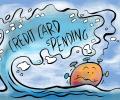
Credit card issuers saw significant erosion of their card base during the July-September quarter as the Reserve Bank of India's (RBI) norms mandated deactivation of cards that have been inactive for a year. The second quarter of the current financial year saw outstanding cards-in-force decline by 2.55 million to 77.7 million. Prior to this, the industry, on an average, was witnessing a net addition of over 1.5 million credit cards a month as players became aggressive on the unsecured lending business after the pandemic.
The outstanding credit card base dropped to 77.99 million in August from over 80 million in July, mainly on account of the new norms of the Reserve Bank of India (RBI) that warrant the deactivation of cards that are inactive for a year. While there was a 2.8 per cent decline in net card additions on a month-on-month (MoM) basis in August, a first in many months, credit card spends slipped 3 per cent on a high base. Still, spends topped the Rs 1-trillion mark for the sixth consecutive month.

Come October 1, merchants, payment aggregators and acquiring banks can no longer store the card details of customers.
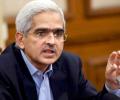
The increasing involvement of Big Tech in the financial system could give rise to concentration risk and there are potential spillovers, which call for closer attention, Reserve Bank of India (RBI) Governor Shaktikanta Das said on Tuesday. "...enormous amounts of consumer data is being generated and leveraged upon by a few entities (the so-called Big Tech) by virtue of their huge customer base. "Such developments raise concerns on concentration risk and potential spillovers as their level of engagement with the financial system strengthens in the years to come," Das said at the Global Fintech Fest 2022.

To educate customers on the modus operandi of financial fraudsters and share inputs on safe banking habits, banks are now coming up with awareness campaigns aimed at preventing customers from falling into the trap of fraudsters.
Credit card spends touched an all-time high of Rs 1.16 trillion in July, registering a growth of 6.5 per cent on a month-on-month basis and 54 per cent year-on-year, latest data put out by the Reserve Bank of India revealed. Spends have topped the Rs 1 trillion level for five consecutive months now. Industry participants are expecting further tailwinds in credit card spends with the onset of the festive season, where spends typically remain at an elevated level.

Commemorating 75 years of India's independence, SBI has launched a 75-day Utsav Deposit Scheme, offering 6.10 per cent for fixed deposits. Senior citizens will get an additional 0.50 per cent and the offer is on until October 30, SBI said.

The Reserve Bank of India has on Wednesday lifted the ban on new customer acquisition by American Express which was imposed with effect from May 2021 due to non-compliance with local data storage norms. "In view of the satisfactory compliance demonstrated by American Express Banking Corp. with the Reserve Bank of India (RBI) circular dated April 6, 2018, on Storage of Payment System Data, the restrictions imposed, vide order dated April 23, 2021, on onboarding of new domestic customers have been lifted with immediate effect," RBI said. Similar bans were imposed on Diners Club International and Mastercard previously.
